

You love the rhythm of a good run along the Main Line. You also know how frustrating it is when knee pain, heel pain, or a tight hamstring cuts a training block short. Rest helps for a while, but if the pain returns the moment you lace up, something deeper is going on.
Choosing the right physical therapist matters as much as choosing the right shoes. Here is what to look for, and how CoreMovement Physical Therapy approaches running care in Bryn Mawr.
What Should Runners Look for in a Physical Therapist?
Running places repeated load on your feet, knees, hips, and spine. Many running injuries develop from that repetition rather than from a single event, so your therapist needs to look beyond the sore spot.
When comparing clinics, keep these qualities in mind:
Undivided attention: Your therapist should spend the full session with you, not split time between several patients.
Root cause thinking: Treatment should address why the pain started, not only where it hurts.
Hands-on skills: Manual therapy can restore motion and ease tight tissue so you can move well again.
Movement assessment: A movement screen can reveal strength gaps, mobility limits, and compensations that feed into overuse injuries.
Patient education: You should leave every visit knowing what to do between sessions.

Which Running Injuries Can Physical Therapy Help?
Physical therapy can address many of the conditions runners face most often. At CoreMovement Physical Therapy, that includes:
Runner's knee (patellofemoral pain)
IT band syndrome
Achilles tendinopathy
Plantar fasciitis
Hamstring strain
Hip pain and groin pain
Ankle sprains
Low back pain
General overuse injuries and tendinopathy
If you also lift or train in CrossFit, your therapist should understand how squats, jumps, and heavy loading add to the demands placed on your body during running. That is where a performance-focused clinic stands apart from a general one.
How Does CoreMovement Physical Therapy Treat Runners?
CoreMovement Physical Therapy is a boutique orthopedic and performance physical therapy clinic serving active adults, runners, and CrossFit athletes on the Main Line. Every plan follows the Assess, Reset, Reload framework, which is built to target root causes instead of chasing symptoms.
Assess
Your first visit centers on understanding how you move. Your Doctor of Physical Therapy reviews your history, training habits, and pain pattern, then uses a movement screen to identify what is driving the problem.
Reset
Next, treatment calms irritated tissue and restores motion. Depending on your needs, this may include:
Manual therapy and joint mobilization
Soft tissue mobilization and trigger point therapy
Dry needling
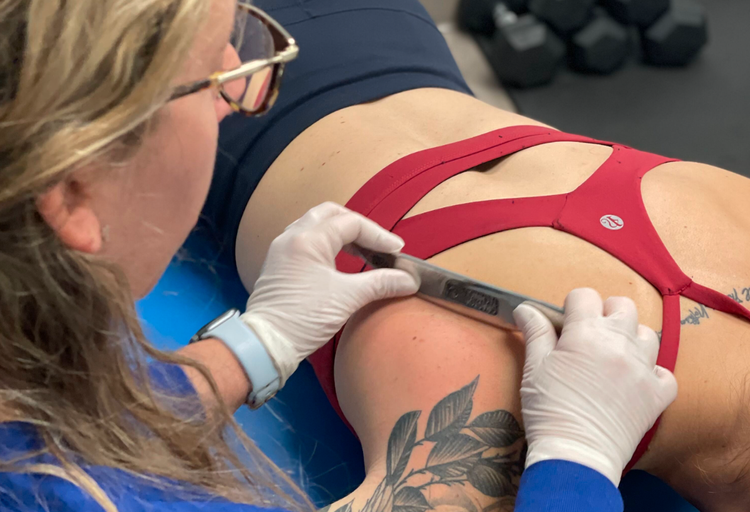
IASTM / Graston technique
Cupping
Kinesiology taping
Reload
Relief is only part of the goal. You then rebuild strength, balance, and control through therapeutic exercise, proprioception training, and neuromuscular re-education so your body can handle running again. This stage supports return to sport and helps reduce the risk of repeat injury.
Why Does One-on-One Care Matter for Runners?
At CoreMovement Physical Therapy, every session is 50 minutes, one-on-one, and exclusively with a Doctor of Physical Therapy. There are no assistants and no double booking.
Small details in your stride, hip control, or foot strength often explain why an injury keeps coming back. Those details are far easier to catch when your therapist is fully focused on you.
Co-founder Dr. Bruce is a Certified Dry Needling Specialist (CDNS) with advanced training in manual therapy and blood flow restriction. She previously worked at a boutique Washington D.C. practice recognized as "Best of DC" for physical therapy four years in a row. You can explore the full range of treatments and services available at the clinic.
Patient education is built into every visit. You will learn what to do both in the clinic and at home, so you take an active role in your recovery and feel confident managing your training load.
How Do You Get Started With Physical Therapy for Running in Bryn Mawr?
If you are not sure whether physical therapy is the right next step, start with a free 20-minute discovery call. You will speak directly with your Doctor of Physical Therapy before your first visit, share what you are dealing with, and get answers to your questions.
Do not wait for a nagging ache to become a season-ending injury. Contact CoreMovement Physical Therapy today to book your discovery call and take the first step toward running strong and pain-free. For more training and recovery tips, visit the CoreMovement blog.
